Washi Tape Journal Ideas: 12 Ways to Decorate a Page
Twelve specific ways to use washi tape on a journal page, from header banners and taped-in tickets to paper pockets, fold-out flaps and a swatch page, each with a short how-to.
A roll of tape beside a journal tends to be used for one thing, usually a strip across the top of the page. These twelve washi tape journal ideas go further: some decorate, some hold things in place and some help you find a page again. Each takes a minute or two and a few inches of tape.
Before you tape: paper and bulk
Two things are worth knowing before the first strip goes down.
Paper thickness. Sturdy journal paper lets you lift and reposition a strip without trouble. Thin paper is more fragile. Place the strip lightly, check it, and only then rub it down. If you need to remove it later, peel slowly at a low angle.
Bulk. Every strip adds a little thickness. Spread across many pages, and always in the same spot, it makes a journal fan open and can leave the cover unable to close flat. Vary where the tape sits from page to page, and keep it out of the gutter near the binding, where it stiffens the page turn.
Give the page a structure
1. Header banner
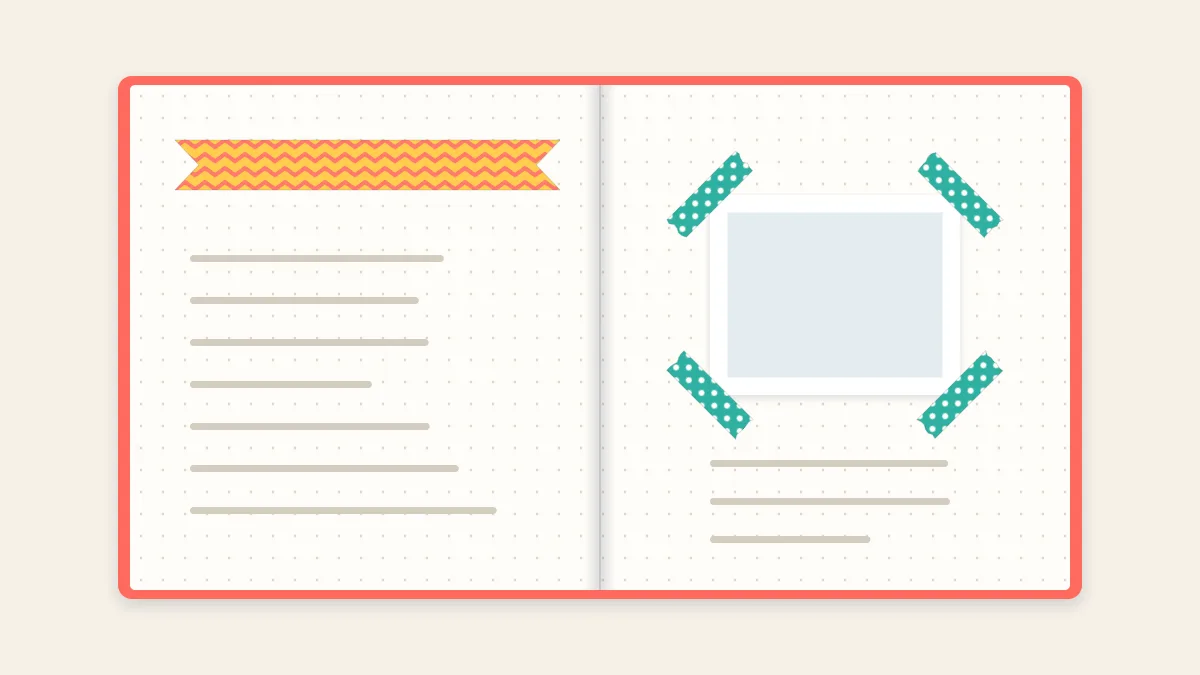
Run one strip of 15 mm tape across the top of the page and trim it at the edges, or stop it short and cut a V-shaped notch in each end. Write the date or title beneath it, or directly on a pale, solid tape with a permanent fine marker.
2. Divider line
A slim tape, about 5 mm wide, laid straight across the page separates one entry from the next, or notes from a to-do list. It is quicker than ruling a line and easier to see when you flip back through.
3. Color-coded margin strip
Run a strip down the outer margin and give each color a meaning: one for travel, one for work, one for reading notes. The same color on every related page lets you spot a subject at a glance without an index.
4. Framed quote box
Mark a small rectangle in pencil and lay four short strips around it to make a box for a quotation, a goal or a list that should stand out. Slim tape keeps the frame light. For neat corners and full-page frames, the method is in the guide to washi tape borders.
Attach things without glue
5. Torn-strip corner accents
Tear four short pieces, each about 1 in (2.5 cm), and set one diagonally across each corner of a photo, postcard or drawing. The torn ends look deliberate here, and the item can be removed later by lifting the corners.
6. Taping in a ticket or receipt
For a ticket, a pressed leaf or a clipping, use a single strip along the top edge only. The paper then lifts like a flap, so you can still read the back or write underneath it. Thermal receipts fade with time, so note the details beside them.
7. A taped paper pocket
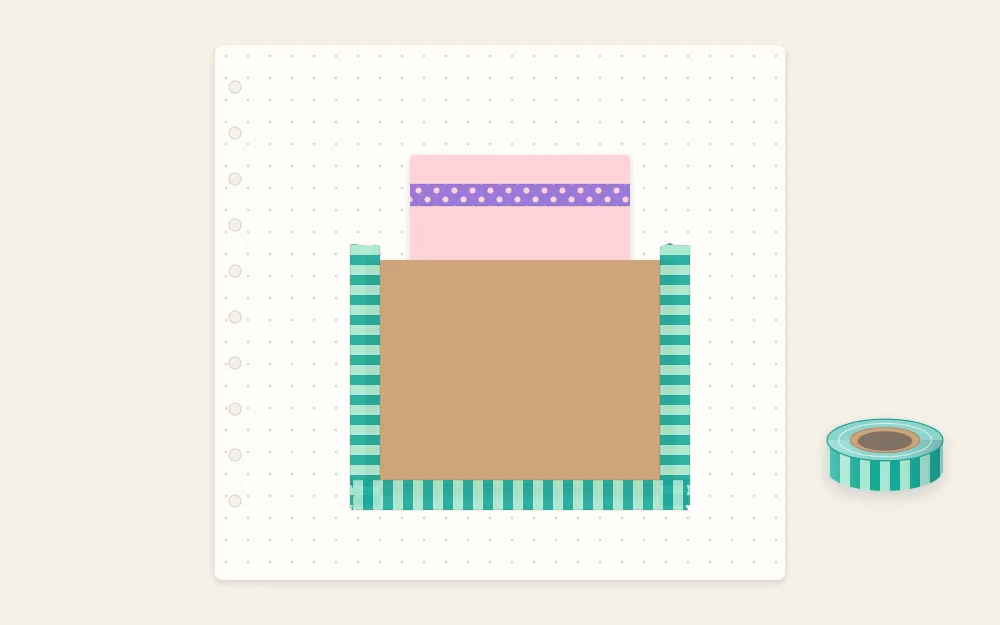
Cut a piece of paper or thin card a little smaller than a playing card. Hold it on the page and tape along the two sides and the bottom, with half the tape width on the pocket and half on the page. Leave the top open. It holds stamps, small notes or spare labels.
Tip
Rub the pocket tape down firmly with a fingernail, especially at the two bottom corners. That is where a pocket starts to peel when something is pushed into it.
8. Fold-out flap hinge
To add an extra panel, such as a map, a longer list or a printed page, lay it beside the journal page so the two edges touch. Run one strip of tape down the join, half on each piece, then turn the flap over and tape the back of the join as well. The double strip works as a hinge that folds flat in either direction. Trim the flap a little narrower than the page so it does not stick out of the closed book.
Keep track and find your place
9. Swatch page
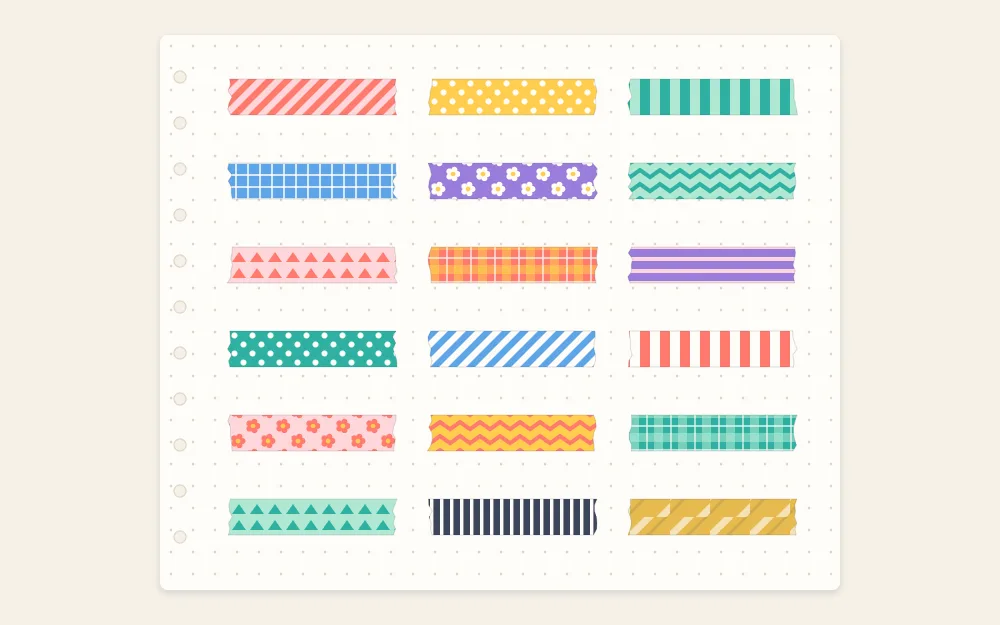
Dedicate one page to a short sample of every roll you own, about 2 in (5 cm) each, in neat rows. Leave space to pencil a note beside each one. It shows how each tape really looks on your paper, which is often different from how it looks on the roll, and it stops you buying a near duplicate.
10. Edge tabs
Fold a short strip around the outer edge of a page so a small flag sticks out, and you can open the journal straight to that section. Staggering them down the edge keeps each one visible. The builds that stay stiff are explained in the tutorial on washi tape page tabs and dividers.
11. Strip calendar marker
On a hand-drawn month grid, lay a slim strip across the days of a trip or an event that spans several days, and the whole block reads as one thing. Dated planners offer many more uses of this kind, which are collected in the list of washi tape planner ideas.
Rescue a page
12. Covering a mistake
A misspelled heading or a smudged line can disappear under a strip. Because washi tape is slightly translucent, dark ink shows through pale tape. Either choose a dark or densely patterned tape, or lay a strip of white tape first and put the decorative one on top. Then rewrite on the tape with a permanent fine marker, or beside it on the paper.
The same trick covers ink that has bled through from the other side of a page.
Small habits that keep pages tidy
- Limit each spread to two or three tapes. One pattern, one solid and a slim accent look more considered than six unrelated rolls.
- Do not stretch the tape. Lay it down relaxed. Stretched tape shrinks back, curls at the ends and can pucker thin paper.
- Tape first, write second. Pen lines stay cleaner when you are not smoothing tape over fresh ink.
- Let marker dry on tape. The surface is less absorbent than paper, so give the ink a few moments before closing the book.
- Test your pens on the swatch page. Water-based and gel inks tend to bead or smear on tape, and it is better to find that out on a sample.
Choosing which ideas to use
You do not need all twelve on one page. A header banner, a divider and one taped-in item are enough for a daily entry. Save the pocket and the flap for pages that collect things, and the margin strips and tabs for a journal you need to search later.
Frequently asked questions
Does washi tape damage journal pages?
On sturdy paper it generally lifts without harm if you peel slowly and keep the strip low to the page. Thin or coated paper is more delicate, and the surface can come away with the tape. Placing a strip lightly at first, and pressing it down only once you are happy, reduces the risk.
Will washi tape make a journal too thick?
It can, if every page carries tape in the same position. Each strip is thin, but dozens stacked at the same spot add up and push the book open. Moving the tape around from page to page, avoiding heavy overlaps and keeping bulky pockets to a few pages keeps the journal closing properly.
What pen writes on washi tape in a journal?
A permanent fine marker with oil- or alcohol-based ink gives the cleanest line, once it has had a short time to dry. Gel pens and water-based fineliners often bead or smear on the tape surface. Trying each pen on a spare strip first avoids a smudged heading.


