How to Store Washi Tape: 8 Ways to Keep Rolls Tidy
Eight ways to store washi tape, from a divided drawer and a dowel to sample cards for travel, with who each one suits and how to protect rolls from sun, heat and dust.
Good washi tape storage does two jobs: it lets you see every roll at a glance, and it protects the edges, where dust and lint collect first. A collection outgrows a pencil case quickly, and once rolls are stacked three deep in a bag, the ones at the bottom stop being used.
The eight options below range from a desk drawer to a few cards in a pencil pouch.
Sort the rolls before choosing a container
Empty everything onto a table and pick one sorting rule. Mixing two rules is what makes a collection hard to search.
- By color suits people who start a project with a palette in mind. Line the rolls up in rainbow order, with neutrals, metallics and multicolor prints at the end.
- By width suits planner and journal users, who reach for slim tapes far more often than wide ones. Slim rolls also get lost among standard ones, so they benefit from a separate home.
- By theme works for seasonal rolls that come out once a year. Box them apart and keep them out of the daily set.
Sorting also shows what you own in triplicate and what is missing. If the gaps are obvious, the guide on choosing washi tape widths and patterns helps you fill them without doubling up.
Eight ways to store washi tape
1. A shallow drawer with dividers
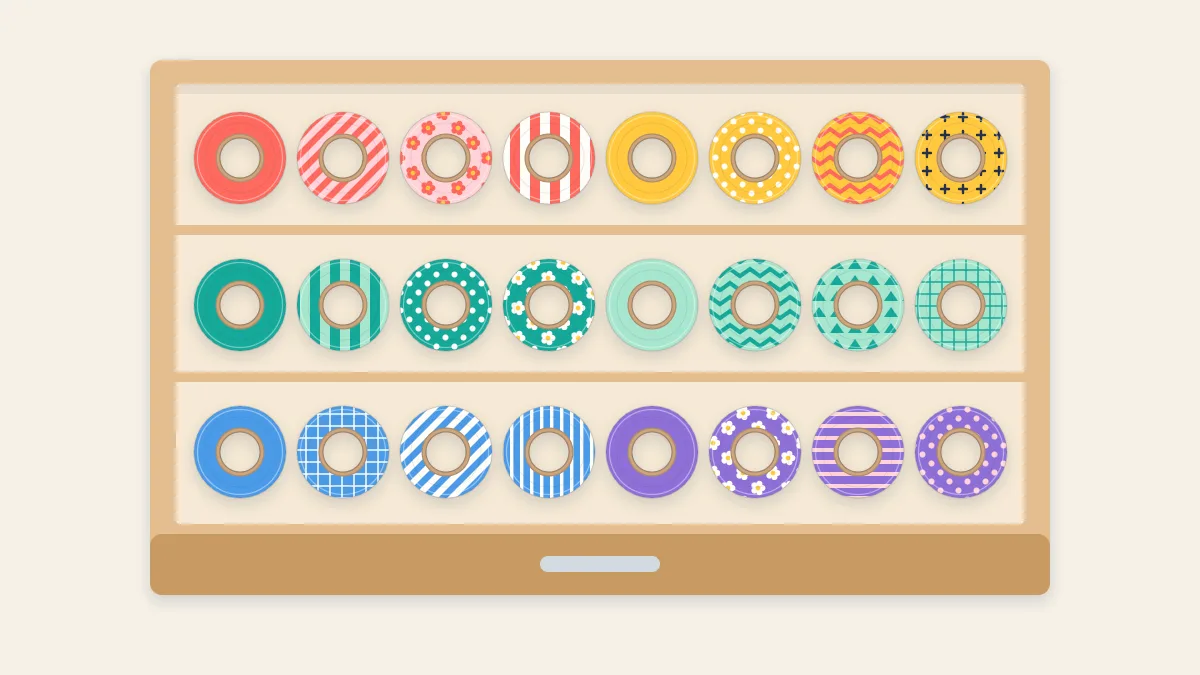
Stand the rolls on edge in rows, like coins in a tray, so every pattern faces up. Strips of cardboard cut to the drawer depth work as dividers and stop the rows from toppling when the drawer opens. A drawer about 2 in (5 cm) deep is enough for standard rolls.
2. A clear lidded box
A transparent box with a lid keeps dust out and lets you check the contents without opening it. Shallow boxes that hold one layer are easier to search than deep ones. Boxes also stack on a shelf.
3. A dowel or rod
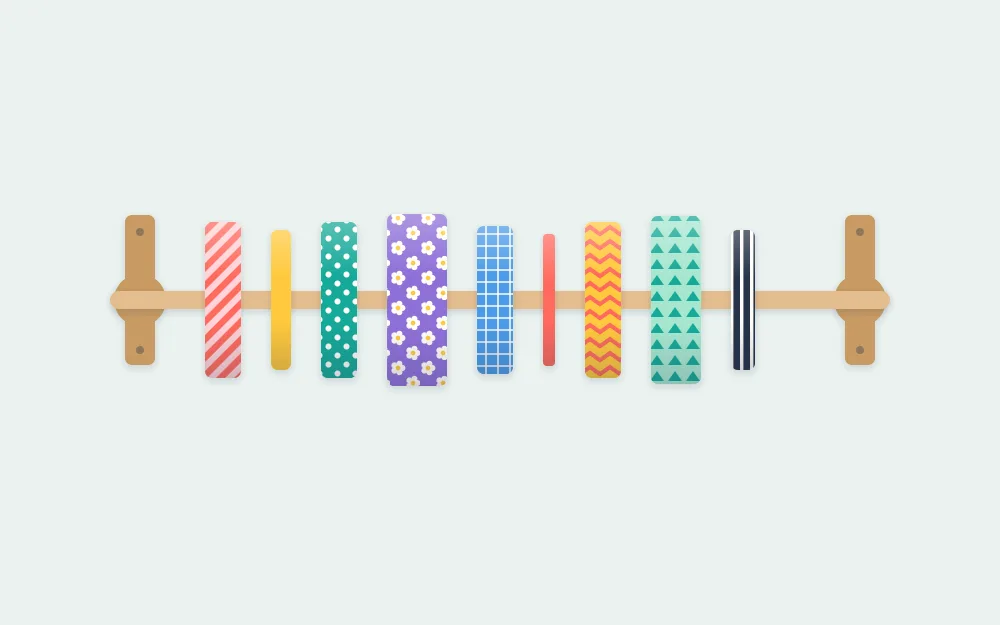
Thread the rolls onto a wooden dowel resting on two small brackets or hooks, in the manner of a paper towel holder. You can pull tape straight from the roll without taking it down. One end has to lift out easily, or changing a roll in the middle becomes a chore. Check the core size first: most standard rolls fit a slim dowel, but some small rolls have narrower cores.
4. A ring or cord through the cores
A large hinged binder ring, a loop of cord or a length of ribbon tied through the cores keeps a group of rolls together. Hang the loop from a hook or drop it into a tote. It suits sets that belong together, such as one project’s palette.
5. A multi-roll dispenser with a cutting edge
A dispenser holds several rolls on one spindle behind a serrated edge. It is quick for repetitive work such as labeling or sealing envelopes. The trade-offs are capacity, usually a handful of rolls, and a zigzag cut end that some projects will not suit.
6. A pegboard with pegs
Pegs or short hooks on a pegboard each hold three to six rolls and turn the collection into a wall display. The cost is exposure: open rolls gather dust, and a board in direct sun will fade the outer wraps over time. Place it on a wall away from the window.
7. A glass jar for slim rolls
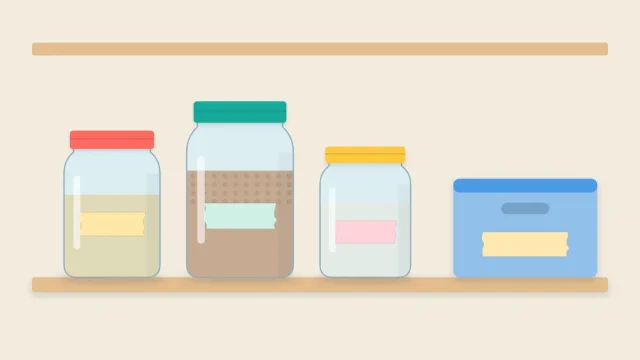
Slim tapes of 3 to 7 mm slide to the bottom of any drawer. A clear glass canning jar or a clean food jar with a lid keeps them together and dust-free, and you can turn the jar to find a color.
8. Sample cards for travel
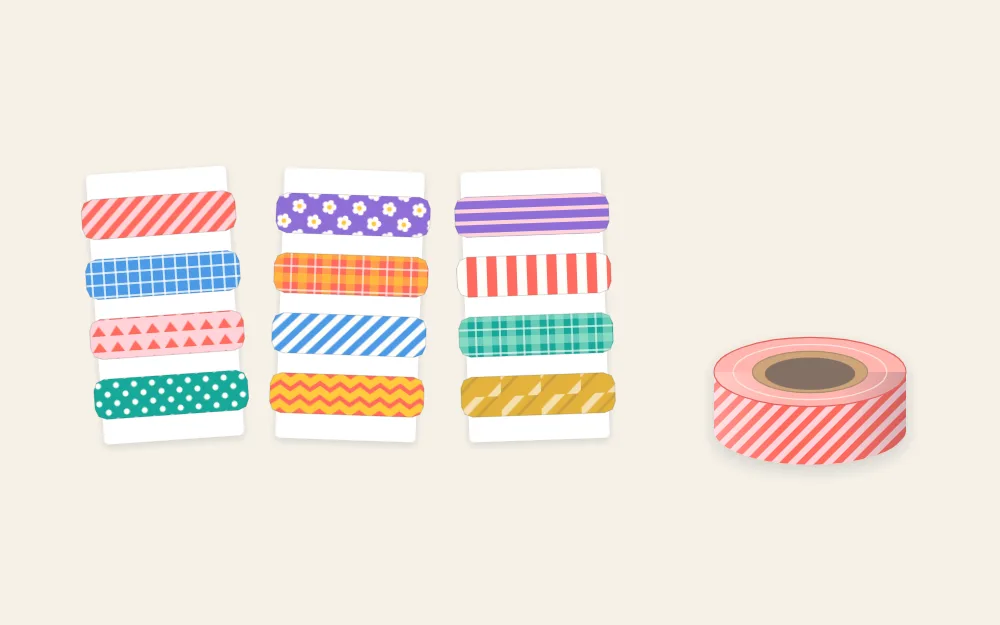
Cut a piece of stiff card or thin plastic about the size of a playing card. Wind several wraps of each tape around it, side by side, pressing lightly. Six to eight tapes fit on one card, and a few cards slip into a planner pocket or pencil pouch in place of a bag of rolls. Do not wind tightly, and use the samples within a few months, since rewound tape is more exposed than tape on its roll.
Which option fits your space
| Option | Best for | Main drawback |
|---|---|---|
| Drawer with dividers | Large collections at a fixed desk | Needs a spare drawer |
| Clear lidded box | Shared rooms, stacking on a shelf | Must be opened to reach rolls |
| Dowel or rod | A working set used straight from the roll | Middle rolls are slow to swap |
| Ring or cord | Project sets and carrying | No dust protection |
| Dispenser | A few everyday tapes | Low capacity, serrated cut |
| Pegboard | Display and quick access | Dust and light exposure |
| Glass jar | Slim rolls | Awkward for wide rolls |
| Sample cards | Travel and planners | Short lengths only |
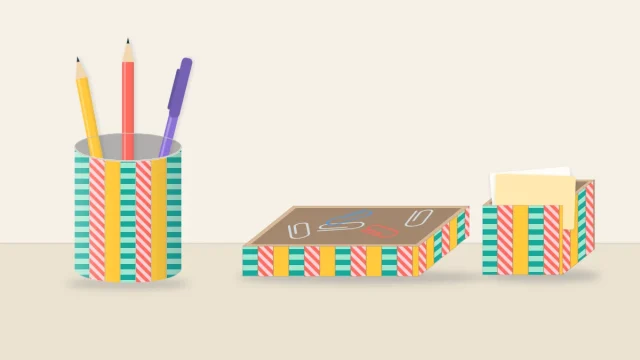
Two systems often work better than one: closed storage for the bulk of the rolls and a small open one for the tapes in current use. A decorated cup or tray on the desk does the second job well, and the tutorial on washi tape desk organizers shows how to make a matching set from cans and box lids.
Keep rolls in good condition
- Away from direct sun. Light fades printed paper, and the outer wrap fades first.
- Away from heat. A shelf above a radiator or a hot car can soften the adhesive so it oozes at the edges and makes the roll sticky to handle.
- Away from dust and lint. The exposed edge of a roll is slightly tacky. Closed storage or a lid keeps fibers off it.
- Dry. Damp air makes paper tape ripple and weakens the hold.
- Edges protected. Rolls thrown loose into a bag get dented, and a dented edge tears unevenly. Fold the last 1/4 in (6 mm) of the tape end under itself to make a tab you can find again.
Tip
If the edges of an older roll have picked up lint, the first full wrap is usually the only part affected. Unwind and discard that wrap and the tape beneath is clean.
Label what you cannot see
Opaque boxes and drawer fronts need a marker on the outside. A short strip of the tape stored inside, stuck to the front of the box, is the simplest label there is: it shows the color family without a word written. For written labels and color codes on bins and folders, see the method for making washi tape labels.
Frequently asked questions
Does washi tape go bad over time?
It has no fixed expiry, but the adhesive and print can change with age. Heat can make the adhesive ooze or weaken, sunlight fades the outer layer, and damp makes the paper ripple. Rolls kept cool, dry, dark and covered generally stay usable far longer than rolls left out on a sunny windowsill.
Should washi tape be stored flat or standing on edge?
Either is fine for the tape itself. Standing rolls on edge in a single row lets you see every pattern and lift one out without disturbing the rest. Stacking flat saves space but hides the lower rolls, so keep stacks short and group them by color so the top roll tells you what is underneath.
How do you stop the end of a washi tape roll from disappearing?
Fold the last few millimeters of the tape back on itself, sticky side to sticky side, to make a small non-stick tab. It takes a second after each use and is easy to find by feel. On patterned rolls where the end blends in, the tab saves picking at the edge with a fingernail.