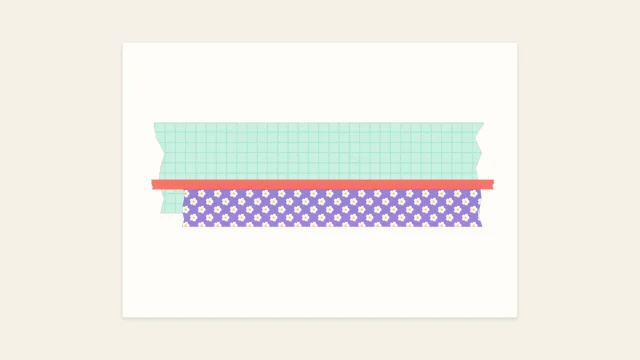
What Is Washi Tape? Material, Stickiness and Everyday Uses
A plain explanation of washi tape: what it is made of, how its low-tack adhesive behaves, how it differs from masking and clear tape, and what it should not be used for.
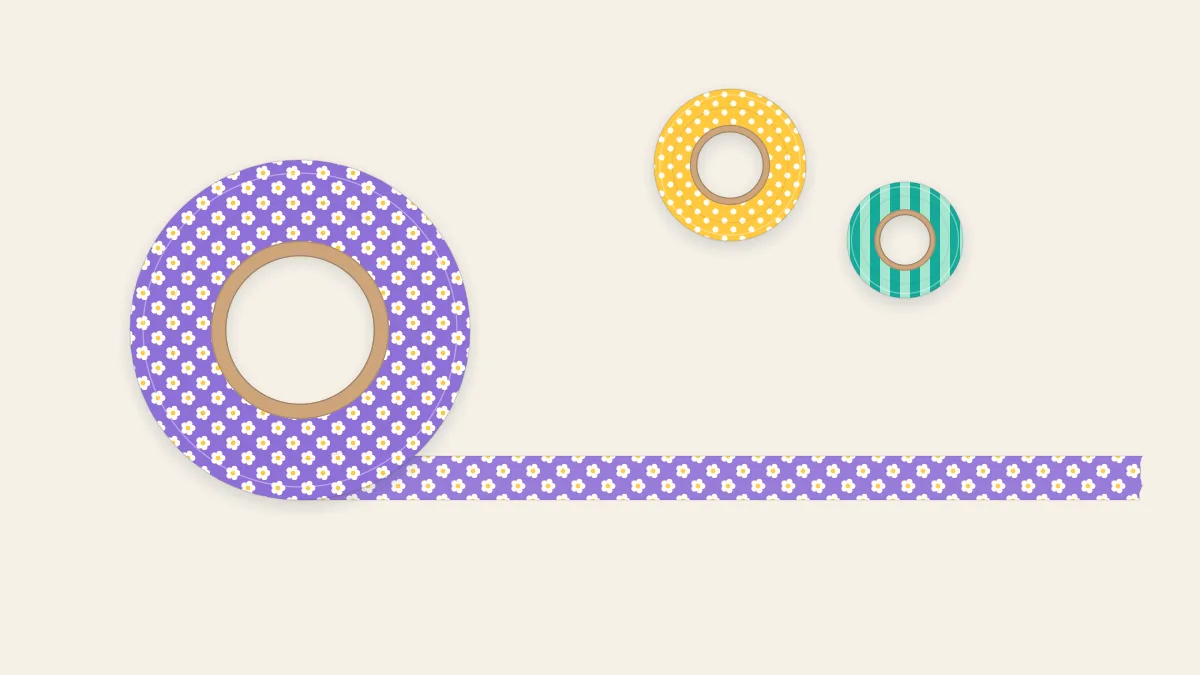
If you have picked up a small patterned roll in a stationery aisle and wondered what is washi tape, the short answer is this: a thin, decorative paper tape with a gentle adhesive that lets you stick it down, lift it and stick it again. It behaves more like a sticker you can reposition than like a tape meant to hold things together.
That one difference explains nearly everything about how it is used, what it is good at and where it disappoints.
The material: paper, a light adhesive and a name
Washi tape originated in Japan and takes its name from washi, the traditional Japanese paper. The name describes the family the tape belongs to rather than what is inside every roll: most washi tape sold today is a thin printed paper tape, not handmade paper.
A roll has two parts that matter. The backing is a fine, slightly fibrous paper, thin enough to tear with your fingers. The adhesive is a low-tack, pressure-sensitive layer, which means it grips when pressed and needs no water, heat or drying time. Low tack is deliberate. It is what makes the tape removable from many surfaces.
Rolls come in a standard width of 15 mm (about 0.6 in), in slim widths of roughly 3 to 7 mm, and in wide versions of 20 to 30 mm or more. Length varies from roll to roll, so check the label.
Five properties that shape how you use it
It tears by hand
You can pinch and tear a strip without scissors. The torn end is soft and slightly uneven, which suits casual pages. For crisp ends you still want scissors or a blade.
It is slightly translucent
Hold a pale strip over a dark line and the line shows through. Layered tapes blend, and the color of the paper underneath changes how a tape looks. A pale tape is truest on white.
It can be repositioned
On smooth paper, glass, metal and many plastics, a strip that has been laid lightly can be lifted and moved. Once you rub it down firmly the hold improves, and removal becomes slower and more delicate.

You can write on it
The surface is matte. A permanent fine marker, either oil- or alcohol-based, leaves a clean line once it has dried. Water-based and gel inks tend to bead or smear, so test your pen on a spare piece first.
It is not strong
Washi tape decorates and marks. It will hold a postcard to a smooth door for a while, but it does not hold weight, and it should never be the only thing keeping a parcel shut or a picture on the wall.
Washi tape compared with other household tapes
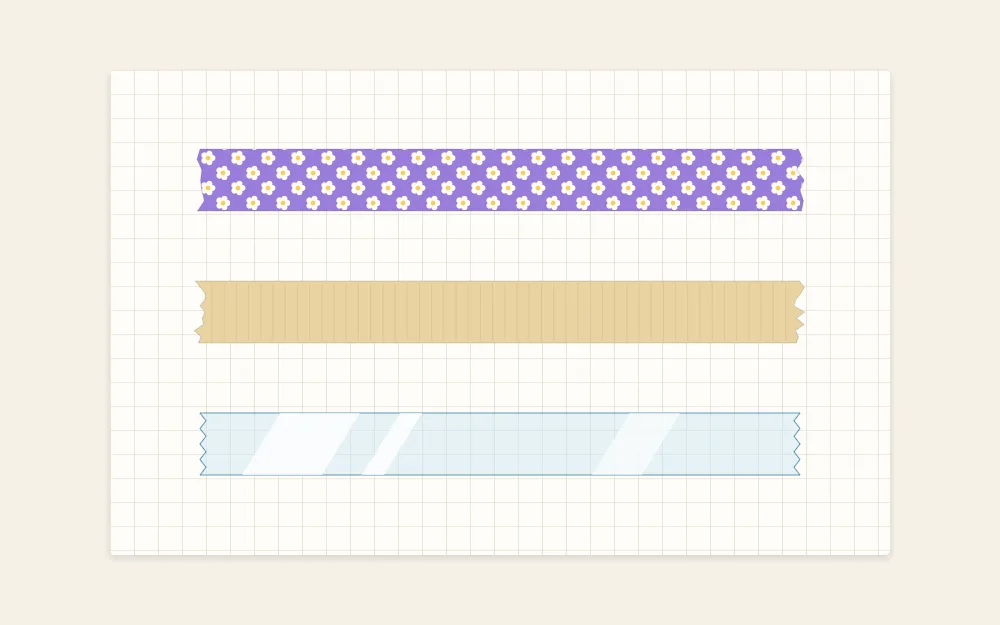
The confusion with masking tape is understandable, because washi tape is a close relative: a paper tape with a light adhesive. The differences are in thickness, appearance and purpose.
| Tape | Backing | Grip | Made for |
|---|---|---|---|
| Washi tape | Thin printed paper, matte, slightly translucent | Low, repositionable | Decorating, labeling, light marking |
| Masking tape | Thicker crepe paper, usually beige | Medium, can leave residue over time | Temporary holding and general masking |
| Painter’s tape | Crepe paper, usually a solid color | Low to medium, made for clean removal | Masking edges while painting |
| Clear tape | Glossy plastic film | High, not meant to come off | Sealing and mending paper |
In practice: use washi tape where the tape is meant to be seen, and a stronger tape wherever something has to stay shut.
Where it sticks well, and where it does not
Good surfaces are smooth, clean, dry and at room temperature:
- Notebook and printer paper, cardstock and kraft paper
- Glass and glazed ceramic
- Smooth metal, such as tins and filing cabinets
- Smooth, hard plastics and sealed or painted wood
Poor surfaces give the adhesive too little to hold on to:
- Fabric, felt, cork and rough, unfinished wood
- Textured walls and heavily embossed paper
- Anything dusty, oily, damp or cold
- Silicone and other non-stick finishes
Pressing a strip down firmly with a fingernail, a bone folder or the back of a spoon makes a noticeable difference on the good surfaces. It will not rescue the poor ones. If a strip keeps lifting, the usual causes and their fixes are collected in the guide to common washi tape mistakes.
Watch out
Removable does not mean harmless on every surface. On painted walls, wallpaper and thin or coated paper, test a hidden patch first and peel slowly at a low angle. Paint and paper fibers can still lift.
What people use it for
Most uses fall into four groups:
- Decorating paper: journal and planner pages, cards, envelopes, gift wrap and tags.
- Decorating objects: pencils, jars, tins, frames, notebook covers and clothespins.
- Labeling and color coding: storage jars and bins, folders, cables and keys.
- Light, temporary fixing: holding a photo or ticket on a page, or a print on a smooth wall.
What washi tape is not for
- Holding weight. No hanging frames, no closing heavy boxes, no repairs.
- Heat. Keep it off lit candles, lamps, radiators and anything else that gets hot. It is paper.
- Water and weather. It is not waterproof. Wipe a taped object rather than soaking it, and expect tape to loosen in a fridge, freezer or dishwasher and outdoors.
- Contact with food. Keep it on the outside of containers, away from anything you will eat.
Buying and keeping your first rolls
Because every roll looks appealing on a display, it helps to know which widths and patterns earn their place before you buy. The guide on how to choose washi tape covers widths, finishes and a small starter set.
Tape lasts longest away from direct sun, heat and dust, with the edges of the roll protected from knocks. Once you own more than a handful, the ideas for storing washi tape rolls will keep them findable.
Frequently asked questions
Is washi tape the same as masking tape?
They are related but not the same. Both are paper tapes with a light adhesive. Washi tape is thinner, smoother, printed with colors or patterns and made to be seen, while ordinary masking tape is a thicker crepe paper meant for temporary holding and masking, and it can leave residue if left in place for long.
Does washi tape come off without leaving marks?
On smooth, sound surfaces such as glass, metal and good-quality paper it usually lifts away cleanly, especially when peeled slowly at a low angle. Painted walls, wallpaper and thin or coated paper are less predictable, so test a hidden patch first. Residue is uncommon but more likely after long exposure to heat or sun.
Can you write on washi tape?
Yes, with the right pen. The matte paper surface takes a permanent fine marker well once the ink has had a moment to dry. Water-based pens and gel inks often bead up or smear, and pencil is faint. Pale, solid-colored tapes give the most readable result for labels.