How to Choose Washi Tape: Widths, Patterns and a Starter Set
A buying guide without brands: what slim, standard and wide tapes are for, which patterns get used most, how to spot a poor roll, and a six-roll starter set described by type.
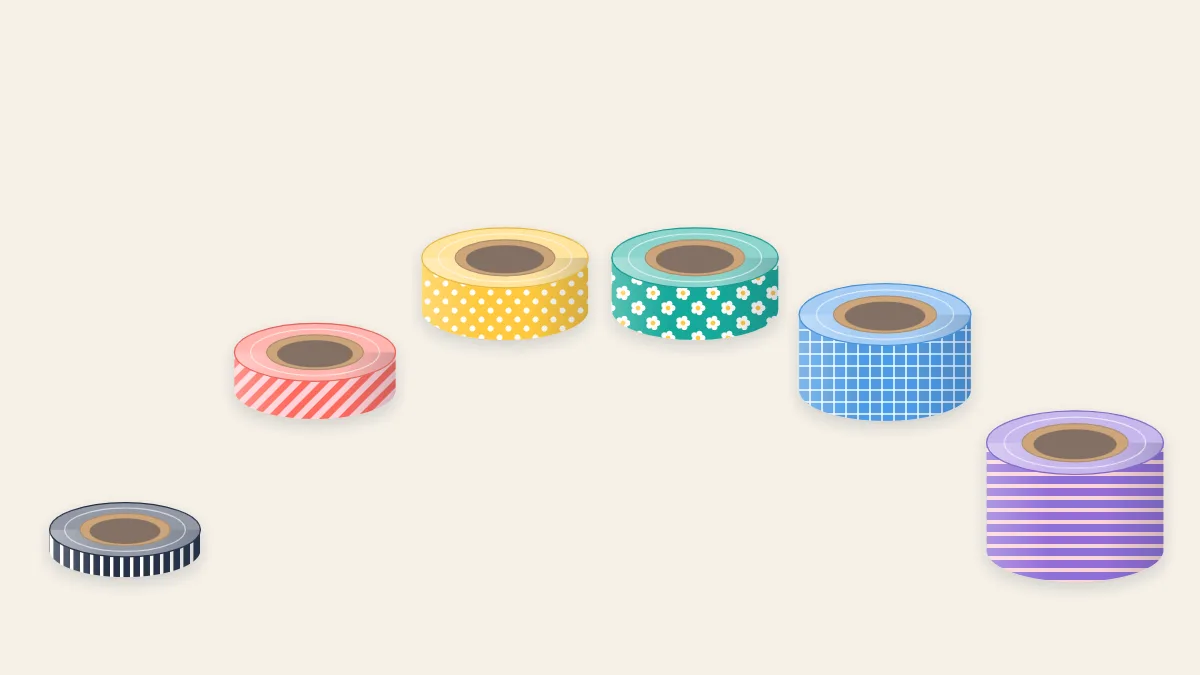
A wall of patterned rolls makes it easy to buy ten and use two. Knowing how to choose washi tape comes down to three decisions made in this order: width first, pattern second, finish third. Get the width right and almost any roll will find a use.
This guide names no brands and no prices. It describes what to look for on the roll and the label, so it applies wherever you shop.
Start with width, because width decides the job
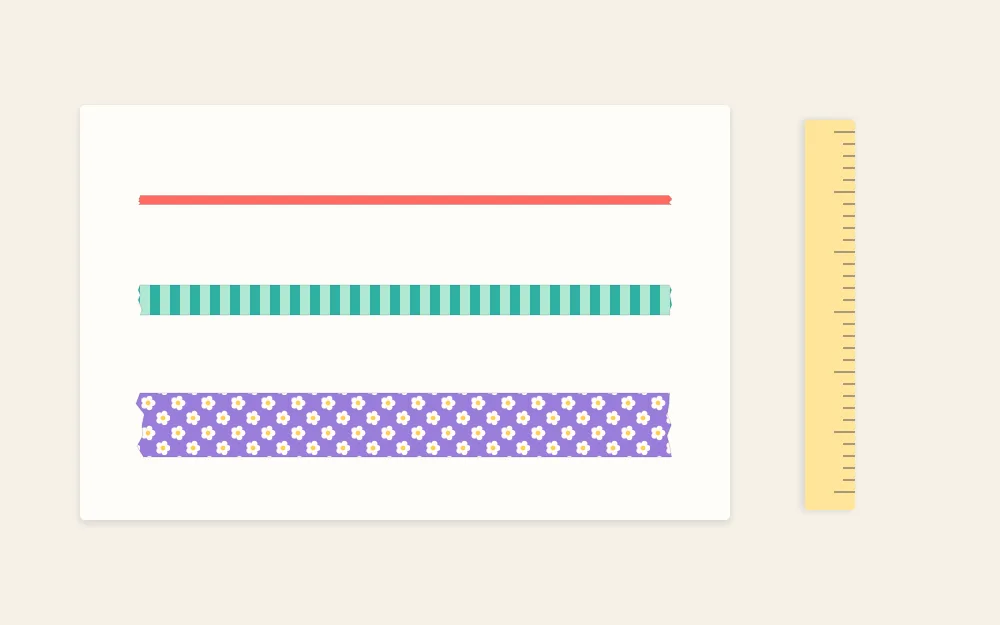
Tape width is given in millimeters on the label. Three groups cover nearly everything on sale.
Standard: 15 mm
About 0.6 in wide, and the width most projects are designed around. It is wide enough to show a pattern and to write a short word on, and narrow enough to wrap a pencil or frame a page. If you buy only one width, buy this one.
Slim: about 3 to 7 mm
Slim tapes draw lines. They mark days in a planner, edge a wider strip, form the thin stripes in a plaid and fit on small tags where 15 mm would swamp the space. They are fiddlier to handle, so they make a better second purchase than a first.
Wide: 20 to 30 mm and up
Wide tapes cover ground quickly: a notebook spine, a band around a jar, a header across a page. Large-scale patterns only read properly at this width. They also show every wrinkle, so they reward slow, careful application.
Match the width to the project
| Width | Suits | Less suited to |
|---|---|---|
| Slim, 3 to 7 mm | Planner boxes, fine borders, plaid lines, accents on tags | Covering surfaces, labels you need to write on |
| Standard, 15 mm | Bookmarks, cards, page borders, pencils, jar bands, labels | Very small day boxes |
| Wide, 20 to 30 mm or more | Notebook spines, headers, box lids, large wall lines | Tight curves and narrow objects |
Read the roll length before comparing rolls
Roll length is not standardized. Many rolls hold around 10 m (33 ft), but shorter and longer rolls sit side by side on the same shelf, and a multi-roll set often contains shorter rolls than a single. Check the label for the length of each roll, not just the number of rolls in the pack.
For small paper projects, length barely matters, since a bookmark uses well under a yard. It matters for wall designs and for wrapping many gifts, where you can run out halfway along a line.
Patterns: why the plain rolls run out first
Patterns fall into a handful of types, and they do different work.
- Solid. One flat color. It goes with everything, takes writing well and calms a busy design.
- Stripe. Lengthwise or diagonal lines. A stripe adds movement and pairs easily with a solid.
- Dot. Small, regular spots. Dots read as texture from a distance, so they are easy to mix.
- Grid. Fine squares or graph lines. Useful in journals and planners, and helpful as a built-in cutting guide.
- Floral and illustrated. The eye-catching rolls. One of these leads a design, while two of them compete.
- Foil accents. Metallic lines or shapes over a color. A little goes a long way, and the foil areas do not take pen well.
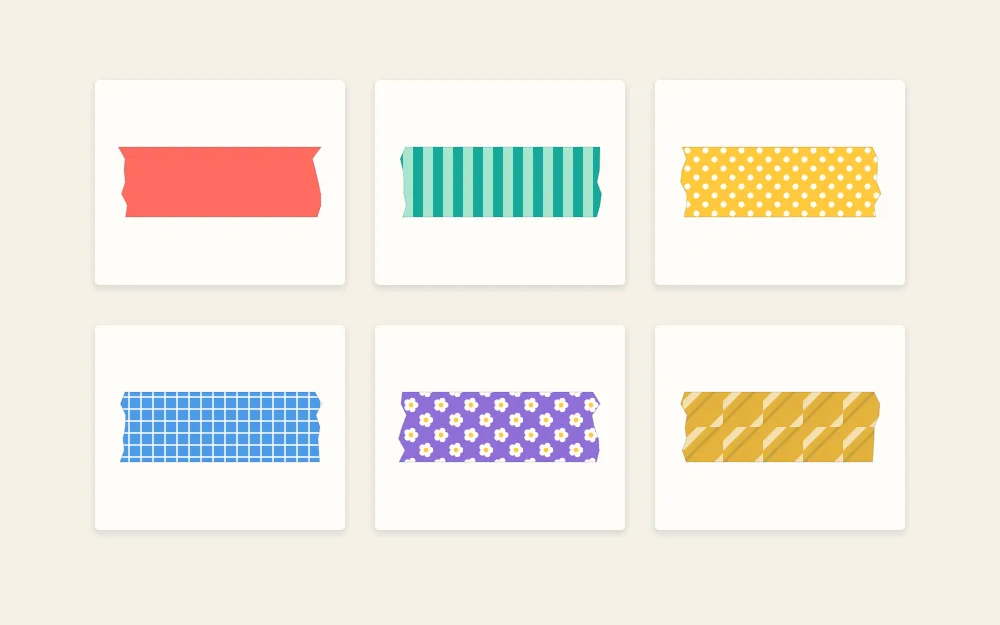
Solids and simple patterns get used most because they play a supporting role in every project, while an illustrated tape suits only the projects that match its subject. A seasonal print waits most of the year for its turn. For putting rolls together once you own a few, see the method for combining washi tape colors and patterns.
Tip
Check how often a pattern repeats along the roll. A motif that repeats every inch or so looks complete on a short strip. One that repeats only every several inches gets cut off on a bookmark or a tag.
Finish and opacity
Most washi tape is matte, with a faint paper texture. Matte tape is the easiest to write on and the most forgiving of fingerprints. Glossy, pearlescent and foil finishes catch the light and look richer, but they are harder to write on and show creases more.
Opacity varies more than you might expect. All washi tape is slightly translucent, which is one of the basic properties covered in the explainer on what washi tape is. Pale and pastel rolls let more show through than dark or densely printed ones. If you plan to cover printed text or a dark surface, choose a darker or more solidly printed tape, or expect to put a white strip underneath.
Signs of a roll that will frustrate you
If you can handle a roll before buying, or once you have opened a new one, look for these.
- Too thin and see-through. If the cardboard core shows clearly through several wraps of tape, the color will wash out on anything but white paper.
- Weak tack. A strip pressed onto clean paper should stay flat at the ends. If it curls up within minutes on a smooth surface, it will not improve.
- Wrinkled or uneven winding. Ridges, a stepped edge or a roll that looks like a cone mean creased tape all the way through.
- A plastic feel. Some decorative tapes are a glossy film rather than paper. They do not tear by hand or take pen the same way, and they peel less kindly from paper.
- Sticky edges. Adhesive oozing at the sides of the roll collects dust and makes the tape hard to unroll cleanly.
A six-roll starter set
Described by type, so you can assemble it from any range:
- A 15 mm solid in a pale neutral, such as cream or light gray, for labels and backgrounds.
- A 15 mm solid in one color you like.
- A 15 mm stripe or dot that includes that same color.
- A 15 mm grid in a neutral.
- A slim roll, about 5 mm, in a dark or strong color for lines.
- One 15 mm floral or illustrated roll that contains your chosen color, as the lead pattern.
Because four of the six share a color, any three of them look planned together. Add a wide roll later if you find yourself covering spines or lids.
Six rolls fit in a small box or a drawer corner. If the set grows, the options for keeping washi tape rolls tidy are worth a look before the collection outgrows its container.
Frequently asked questions
What width of washi tape is best to start with?
The standard 15 mm width, about 0.6 in. Most projects and tutorials assume it, it is wide enough to show a pattern or carry a handwritten word, and it still wraps small objects neatly. Add a slim roll of around 5 mm next, and a wide roll only when a project calls for one.
How long is a roll of washi tape?
It depends on the roll. Around 10 m, or 33 ft, is common, but shorter and longer rolls are sold alongside each other, and rolls in multi-packs are often shorter than single rolls. The length is printed on the label or packaging, so compare that figure rather than the size of the roll.
Should the first rolls be patterned or plain?
Mostly plain or simply patterned. Solids, stripes, dots and grids combine with each other and with any illustrated tape, so they are used in nearly every project. One floral or illustrated roll is enough to begin with, chosen so that it shares a color with the plainer rolls.